Around the world, cultures come alive through celebrations filled with music, dance, tradition, and vibrant hues. Colorful festivals are more than just visual spectacles—they represent history, beliefs, seasonal changes, and community bonding. From powder-filled streets in India to glowing lanterns in Asia and flamboyant parades in the Americas, colorful festivals unite people beyond borders.
In this guide, we explore the most colorful festivals across different countries, highlighting their origins, significance, and why they attract millions of travelers every year.
What Are Colorful Festivals and Why Are They Celebrated?
Colorful festivals symbolize joy, renewal, gratitude, and cultural pride. They help preserve traditions passed down through generations while offering a powerful sense of identity. In many countries, colorful festivals also boost tourism, bringing global attention to local customs and art forms.
1. Holi – The Festival of Colors (India)
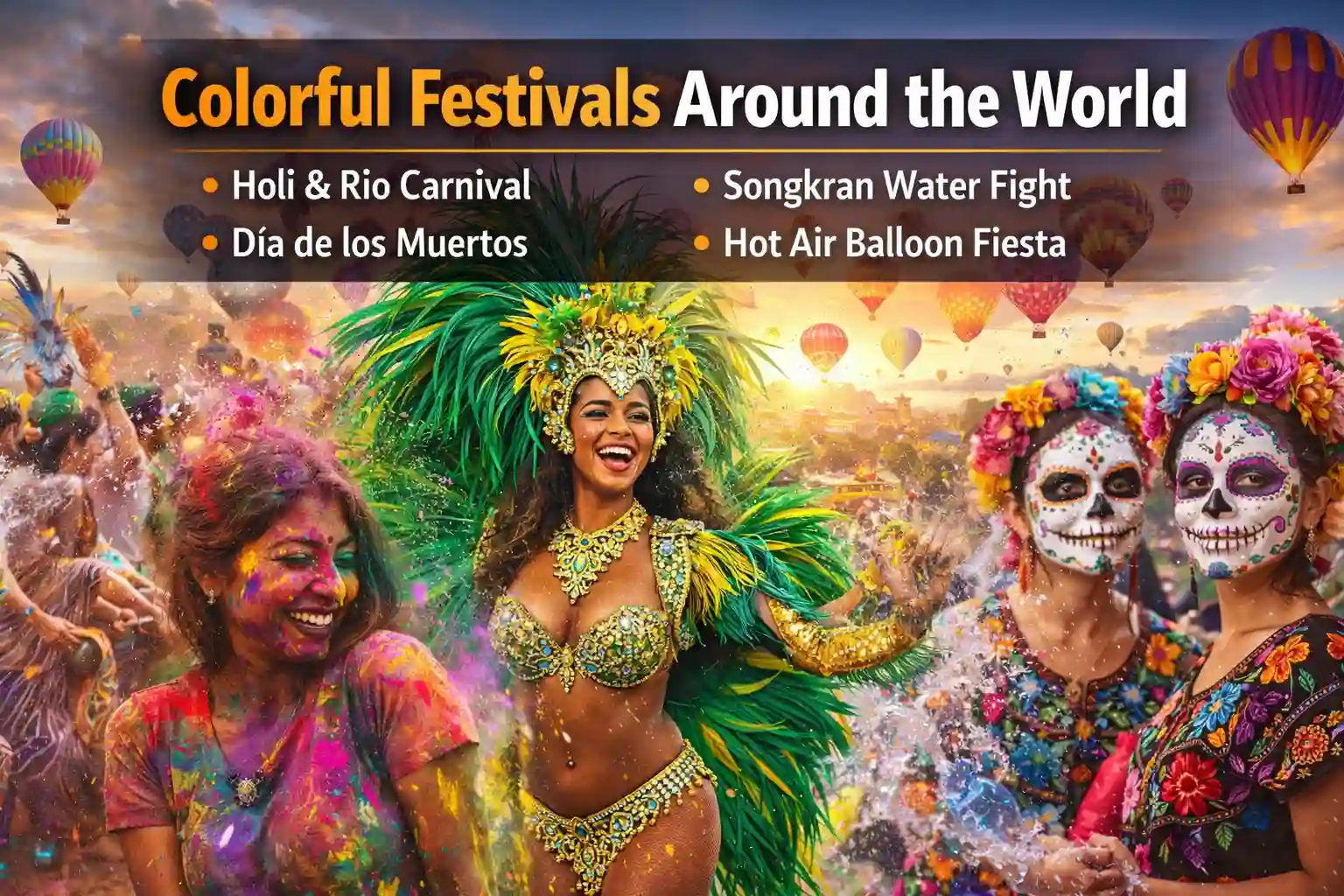
Holi is one of the world’s most famous colorful festivals, celebrated across India and beyond. Marking the arrival of spring, people throw vibrant colored powders, dance to music, and share festive sweets.
The festival represents the victory of good over evil and promotes unity, forgiveness, and joy, making it a global symbol of celebration through color.
2. La Tomatina (Spain)
Held annually in Buñol, La Tomatina is one of Europe’s most playful colorful festivals. Participants throw ripe tomatoes at each other, turning the streets into a sea of red.
Though not traditional in origin, the festival has become a major international attraction known for its fun, chaos, and unforgettable visuals.
3. Carnival of Rio de Janeiro (Brazil)
The Rio Carnival is among the grandest colorful festivals in the world. With samba parades, glittering costumes, and elaborate floats, the city transforms into a nonstop celebration.
This festival reflects Brazil’s African, Portuguese, and Indigenous cultural influences, making it a vibrant expression of national identity.
4. Songkran Water Festival (Thailand)
Songkran, the Thai New Year, is a joyful and colorful festival celebrated with massive water fights. Streets fill with people splashing water, symbolizing cleansing and renewal.
Traditional rituals blend seamlessly with modern celebrations, making Songkran one of Asia’s most energetic colorful festivals.
5. Día de los Muertos (Mexico)
Día de los Muertos, or Day of the Dead, is a deeply meaningful and visually striking festival. Families honor deceased loved ones with colorful altars, marigold flowers, face paint, and music.
This colorful festival celebrates life, remembrance, and the belief that death is a natural part of the human journey.
6. Chinese New Year Lantern Festival (China)
Among the most iconic colorful festivals in Asia, the Lantern Festival marks the end of Chinese New Year celebrations. Thousands of glowing lanterns illuminate cities and villages.
Red, gold, and intricate designs dominate the celebrations, symbolizing luck, prosperity, and happiness.
7. Hanami Cherry Blossom Festival (Japan)
Hanami celebrates the blooming of cherry blossoms across Japan. Though subtle compared to others, it is one of the most elegant colorful festivals, with pink and white blossoms covering parks and streets.
Families and friends gather under flowering trees, appreciating nature’s beauty and the fleeting nature of life.
8. Notting Hill Carnival (United Kingdom)
The Notting Hill Carnival is Europe’s largest street festival and one of the UK’s most vibrant colorful festivals. It celebrates Caribbean culture with lively music, dancing, and bold costumes.
The festival promotes diversity, unity, and cultural expression in the heart of London.
9. Mardi Gras (United States)
Mardi Gras in New Orleans is famous for its parades, beads, masks, and street celebrations. Purple, green, and gold dominate this colorful festival.
Rooted in French traditions, Mardi Gras blends history, music, and flamboyant visuals into a globally recognized event.
10. Up Helly Aa (Scotland)
Up Helly Aa is a dramatic and fiery festival held in Scotland’s Shetland Islands. While different from typical colorful festivals, its blazing torches and Viking costumes create a powerful visual spectacle.
The festival honors Norse heritage and marks the end of winter.
11. Pushkar Camel Fair (India)
The Pushkar Camel Fair is one of India’s most unique colorful festivals. Held in Rajasthan, it features decorated camels, folk performances, traditional attire, and desert landscapes filled with color.
This festival combines commerce, culture, and spirituality into one vibrant event.
12. Inti Raymi – Festival of the Sun (Peru)
Inti Raymi is an ancient Incan festival celebrating the Sun God. Traditional costumes in bold colors, ceremonial dances, and historical reenactments make it one of South America’s most cultural colorful festivals.
It reflects Peru’s deep-rooted indigenous heritage.
13. Boryeong Mud Festival (South Korea)
The Boryeong Mud Festival is a modern and fun addition to global colorful festivals. Participants cover themselves in mineral-rich mud while enjoying music, games, and beach activities.
Though messy, it is visually striking and hugely popular with international tourists.
14. Thaipusam (Malaysia)
Thaipusam is a Hindu festival celebrated with devotion, processions, and elaborate body art. Bright flowers, ceremonial attire, and rhythmic chants define this deeply spiritual colorful festival.
It showcases faith, endurance, and cultural tradition.
15. Venice Carnival (Italy)
The Venice Carnival is known for its elegant masks and historic costumes. Though more refined than other colorful festivals, it remains visually captivating.
This festival celebrates art, mystery, and centuries-old European traditions.
16. Sinulog Festival (Philippines)
Sinulog is one of the Philippines’ largest colorful festivals, held in honor of the Santo Niño. The streets fill with dancers wearing vibrant costumes, moving to rhythmic drumbeats.
It reflects faith, culture, and joyful community celebration.
17. Timkat Festival (Ethiopia)
Timkat celebrates Epiphany in Ethiopia and is one of Africa’s most spiritual colorful festivals. Participants dress in white robes accented with bright umbrellas and ceremonial items.
The festival combines religious devotion with rich cultural heritage.
18. Burning Man (United States)
Burning Man is a unique and unconventional entry among colorful festivals. Held in Nevada’s desert, it features massive art installations, creative costumes, and neon-lit structures.
It emphasizes self-expression, creativity, and community participation.
19. Gion Matsuri (Japan)
Gion Matsuri is one of Japan’s oldest and most traditional colorful festivals. Ornate floats, historical garments, and cultural performances fill Kyoto’s streets.
This festival highlights craftsmanship, history, and artistic excellence.
20. Albuquerque International Balloon Fiesta (USA)
This festival fills the sky with hundreds of hot air balloons in vivid colors. It is one of the most visually stunning, attracting photographers and travelers from around the world.
The sight of balloons rising at sunrise is truly unforgettable.
How Colorful Festivals Boost Tourism
It play a major role in promoting tourism. They attract visitors, support local economies, and showcase cultural diversity. Many destinations are globally recognized solely because of their iconic festivals.
Cultural Significance
Beyond aesthetics, colorful festivals carry deep cultural meanings. Colors often symbolize emotions, seasons, spirituality, and social values, making these celebrations powerful cultural expressions.
Tips for Experiencing Responsibly
When attending :
- Respect local customs and traditions
- Wear appropriate clothing
- Follow safety guidelines
- Support local artisans and businesses
Responsible participation ensures positive experiences for both visitors and communities.
Conclusion
The world’s most colorful festivals across different countries remind us that celebration is a universal language. Whether rooted in religion, history, nature, or modern creativity, bring people together in joy and unity.